
How to verify a cafe is genuinely halal-certified in Puchong
By Sarah · Updated 2026-06-15
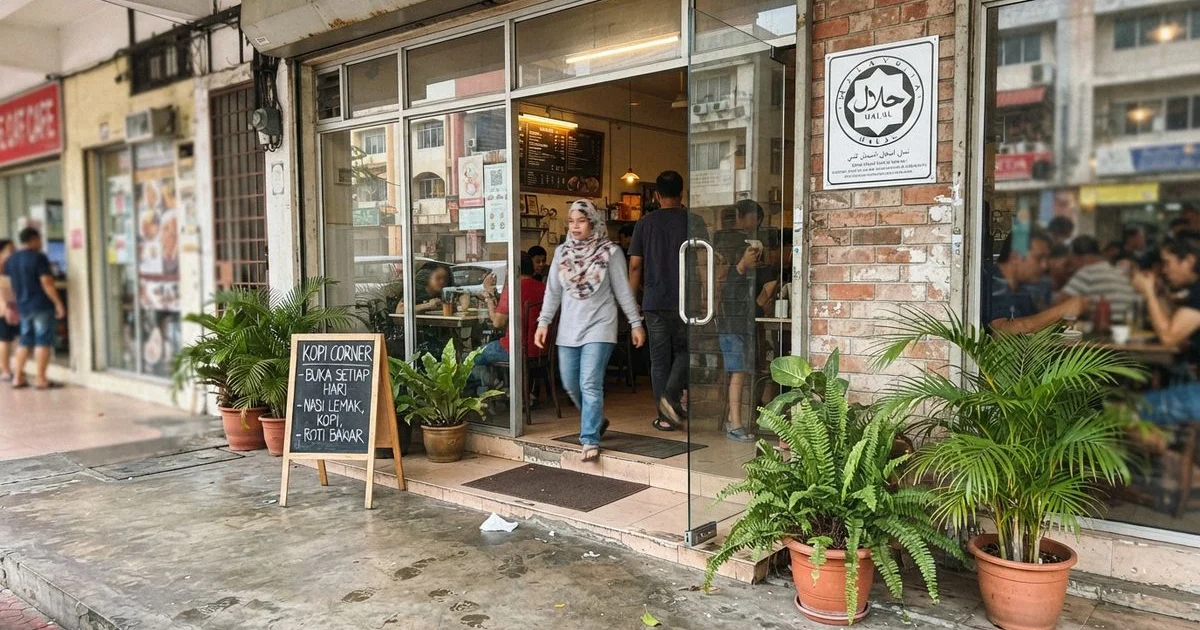
Puchong’s halal and muslim-friendly cafe scene has grown fast, and the two terms get used almost interchangeably online even though they mean different things. If halal status genuinely matters to how you choose where to eat, it is worth knowing the difference and how to check it yourself rather than relying on a label in a listing or a Google review.
This is general information to help you ask better questions on-site. It is not a substitute for checking directly with the cafe or the relevant certifying body if certainty matters to you.
Muslim-friendly versus halal-certified
“Muslim-friendly” is a self-declared description. It usually signals no pork and no alcohol on the menu, and often a generally accommodating environment, but it is set by the business itself with no external audit involved. “Halal-certified” is a formal status granted after an external body reviews the kitchen, ingredient sourcing, storage, and preparation process against a defined standard. The two overlap a lot in practice, but only one of them comes with independent verification behind it.
| Term | Who decides | What it typically covers |
|---|---|---|
| Muslim-friendly | The business itself | No pork, no alcohol, general accommodation |
| Halal-certified | An external certifying body (e.g. JAKIM, state religious department) | Full audit of ingredients, storage, and preparation |
How certification actually works in Malaysia
JAKIM is the primary national certifying body, and state Islamic religious departments also issue certification at the state level. A certified premises is typically given a certificate and a logo to display, tied to a specific outlet address and an expiry date. Certification is not permanent: it gets renewed periodically, and a cafe that was certified a year ago is not automatically still certified today.
What to actually check before you rely on it
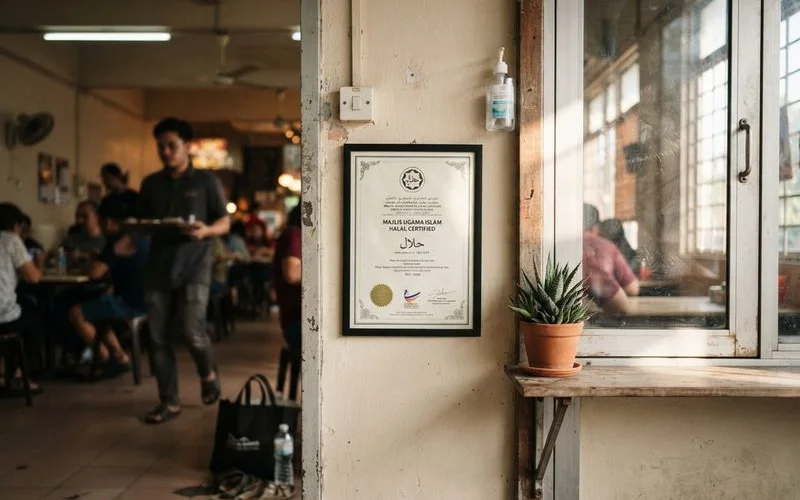
- Ask to see the certificate. A legitimate one names the specific outlet, not just a parent brand or franchise name, and shows a current expiry date.
- Check the display location. Certificates are usually posted near the entrance or the cashier counter. If you cannot find one, ask directly rather than assuming.
- Ask about bought-in items. Some cafes source cakes, syrups, or specific drinks from outside suppliers who may not carry the same certification as the main kitchen.
- Watch for expired dates. An outdated certificate on the wall does not mean current certification; renewal can lapse without the signage being taken down right away.
- When in doubt, ask staff directly. A cafe confident in its certification will usually answer clearly and quickly. Vague or evasive answers are worth taking seriously.
When there’s no certificate but the cafe seems genuine
Not every cafe pursuing halal practices has gone through formal certification, sometimes because the process takes time, or because a smaller independent business hasn’t applied yet even though its practices are genuinely careful. This doesn’t mean the cafe is being dishonest, but it does mean you’re relying on the owner’s word rather than an external audit. If certification specifically matters to you, it’s reasonable to treat an uncertified but self-described halal or muslim-friendly cafe differently from a certified one, and to ask more detailed questions about sourcing and kitchen practices before deciding.
Why this matters more in a mixed dining scene
Puchong’s food scene mixes fully halal-certified outlets, self-declared muslim-friendly cafes, and places with no religious dietary claim at all, often within the same mall or street. That variety is part of what makes the area interesting to eat in, but it also means the label on a listing is a starting point for your own check, not the final word.
Our halal and muslim-friendly cafes hub is a good place to start browsing outlets in this category, and our methodology explains how listings are scored generally across the directory. You can also return to the homepage at any time to explore other categories.
If certified status is a firm requirement for you, treat a listing’s description as a starting point, not a guarantee, and confirm directly with the cafe before you go, a two-minute question at the counter is a small price for peace of mind.
FAQ
- Is 'muslim-friendly' the same as halal-certified?
- No. Muslim-friendly usually means no pork or alcohol on the menu, decided by the owner. Halal-certified means an official body has audited the kitchen, suppliers, and processes against a formal standard.
- Who issues halal certification in Malaysia?
- JAKIM (the Department of Islamic Development Malaysia) is the main certifying body nationally, alongside state religious departments. A certified premises should be able to show a certificate or logo tied to one of these bodies.
- What should I look for on-site to confirm certification?
- Ask to see the certificate, check that it names the specific outlet (not just the parent company) and that the date has not expired. A certificate displayed near the entrance or cashier is a good sign; reluctance to show one is worth noting.
- Does certification cover everything on the menu?
- Not always. Some cafes are certified for their core kitchen but bring in third-party items, like specific cakes or drinks, from uncertified suppliers. If this matters to you, ask specifically about any bought-in items.